
Educational overview only. InsureCard Hub (cardhub.telegram-184.com) is not an insurer, bank, or lender, and does not provide personalized financial product advice. Verify details with official sources or a licensed professional.
Simple Steps to Avoid PMI on a Conventional Loan

Image Source: pexels
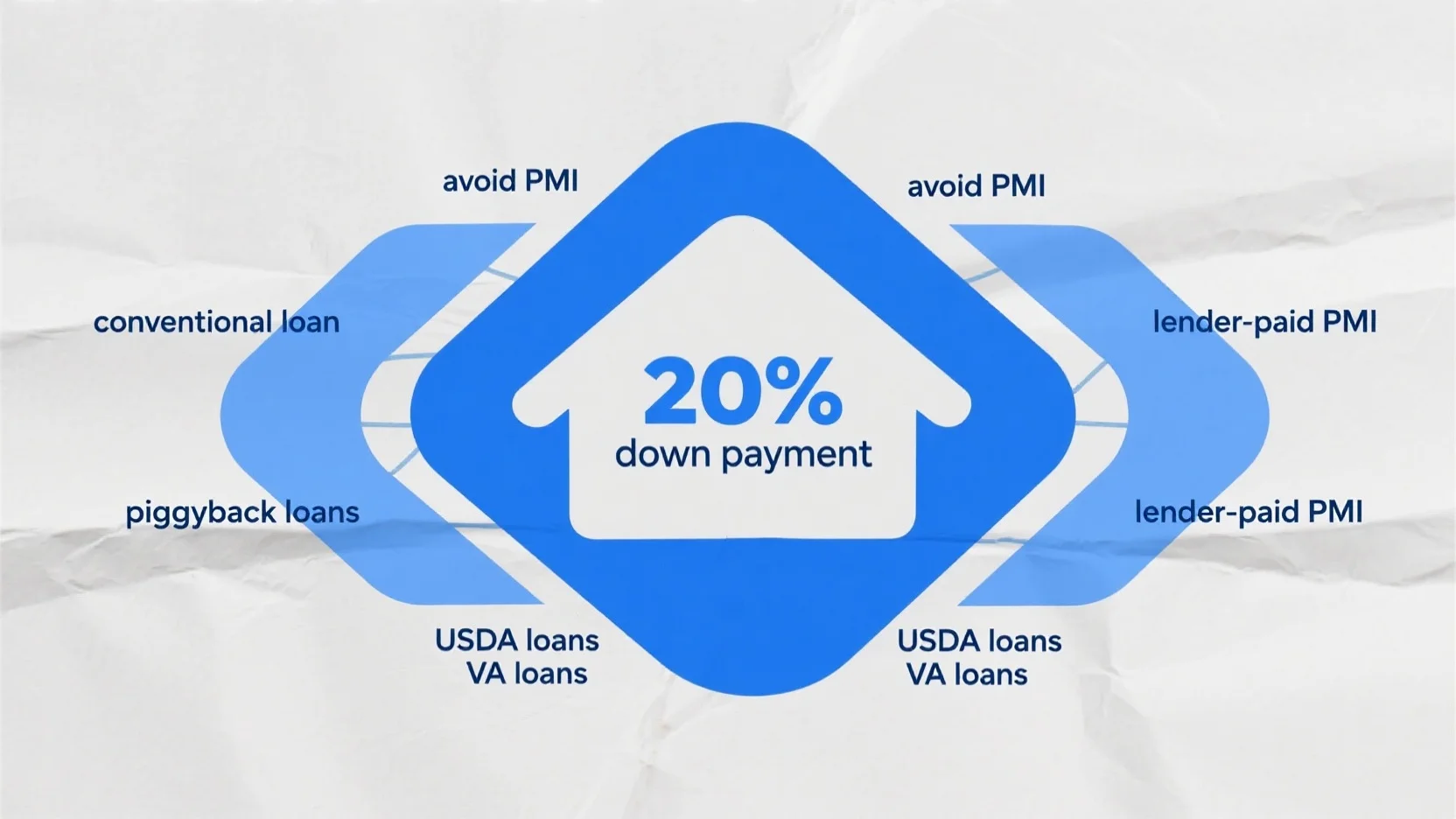
Private Mortgage Insurance (PMI) protects lenders when borrowers default on their loans. It applies to conventional loans with less than a 20% down payment or a loan-to-value (LTV) ratio exceeding 80%. If you’re wondering how to avoid PMI on a conventional loan, I always recommend making a 20% down payment to avoid PMI entirely. For those unable to do so, alternative strategies exist, such as exploring specific loan programs or financing options.
Key Takeaways
- A 20% down payment is the most effective way to get rid of PMI. This choice will cut your total costs over the length of your loan. It can also help you get better overall loan terms.
- Coming up with a 20% down payment isn’t always possible. If that’s your situation, consider two options. You can pick piggyback insurance or lender-paid insurance. Either choice will let you avoid paying PMI. Just remember these options do have their own trade-offs.
- Check out loans backed by the government, like VA or USDA loans. These loans don’t have PMI, and you can save money on them if you meet the requirements.
What is PMI and Why is it Required?
Definition and Purpose of PMI
Private Mortgage Insurance (PMI) exists to protect lenders when borrowers fail to repay their loans. It was introduced in 1957 to make homeownership more accessible for those unable to afford a 20% down payment. Since then, PMI has enabled over 33 million people to purchase homes they might not have otherwise afforded. Significant reforms after the 2008 financial crisis improved PMI’s role in housing finance, ensuring sustainable mortgage credit for low down payment borrowers.
PMI is specific to conventional loans and differs from other types of mortgage insurance, such as FHA mortgage insurance. For example, PMI can be canceled once you reach 20% equity in your home, while FHA mortgage insurance often requires refinancing to remove.
When PMI is Required on a Conventional Loan
PMI becomes mandatory when the down payment is less than 20% of the home’s purchase price. Lenders also consider other factors, such as credit score, debt-to-income ratio (DTI), and property type. Here’s a breakdown of the criteria:
| Criteria | Description |
|---|---|
| Down Payment | Required for down payments under 20%. |
| Credit Score | Most of the time, the lowest number you need is 620. Sometimes the rules are stricter, so you’ll need a higher number to meet the requirements. |
| Stable Income and Employment | If you want to borrow money, you need a steady work history. You also need a consistent record of regular income. Both of these have to go back at least two full years. |
| Debt-to-Income Ratio (DTI) | If you borrow money from a lender, they want to be sure you can pay it back. Your DTI compares how much you owe each month to how much you earn. Most lenders like this number to be lower than 43%. |
| Property Types | Buying property as an investment comes with extra risks. Because of those higher risks, you have to put down a bigger first payment. The required starting payment for these properties is higher than usual. |
Understanding these requirements helps borrowers plan better and explore strategies for how to avoid PMI on a conventional loan.
Financial Impact of PMI on Borrowers
PMI adds to the overall cost of a mortgage. On average, PMI costs about 0.4% of the loan amount annually. For a $400,000 loan, this translates to $1,600 per year or roughly $133 per month. However, costs vary based on factors like credit score and down payment size. Borrowers with lower credit scores or smaller down payments often face higher premiums.
For example, a borrower with a 10% down payment and a credit score of 760 might pay $50 monthly, while someone with a score of 620 could pay $250. These additional costs can significantly impact monthly budgets, making it essential to explore ways to avoid or minimize PMI.
How to Avoid PMI on a Conventional Loan
Make a 20% Down Payment
The most straightforward way to avoid PMI is by making a 20% down payment. This approach eliminates the need for private mortgage insurance entirely. I always recommend this option when possible because it reduces your loan-to-value (LTV) ratio, which can lead to better loan terms and lower monthly payments. However, saving for a 20% down payment can be challenging. Borrowers often overcome this hurdle by using gift funds from family or exploring state and local homebuyer assistance programs. Purchasing a less expensive home is another strategy to meet the 20% threshold.
Use a Piggyback Loan (80-10-10 Loan)
A piggyback loan, also known as an 80-10-10 loan, is another way to avoid PMI. With this method, you take out a primary mortgage for 80% of the home’s value, a second mortgage for 10%, and make a 10% down payment. This structure avoids PMI because the primary mortgage stays below the 80% LTV ratio. While this option has advantages, such as avoiding PMI costs and potentially lowering monthly payments, it comes with risks. The second mortgage often has a higher interest rate, and managing two payments can strain your budget. Adjustable rates on the second loan can also lead to unpredictable costs.
Before you pick a piggyback mortgage, take a minute to think first. Ask if you have the ability to keep up with all its costs. You also need to consider how steady your money situation is.
Explore Lender-Paid Mortgage Insurance (LPMI)
Lender-Paid Mortgage Insurance (LPMI) is another alternative. With LPMI, the lender covers the cost of PMI in exchange for a slightly higher interest rate on your loan. This option eliminates monthly PMI payments, which can make your mortgage more affordable initially. However, the higher interest rate lasts for the life of the loan, potentially increasing overall costs. Unlike borrower-paid PMI, LPMI cannot be canceled once you reach 20% equity. I recommend carefully comparing the long-term costs of LPMI versus borrower-paid PMI before making a decision.
Consider VA or USDA Loans
Government-backed loans, such as VA and USDA loans, provide excellent options for avoiding PMI. VA loans, available to eligible service members, veterans, and their spouses, do not require PMI or any other ongoing mortgage insurance. USDA loans, designed for low- to moderate-income buyers in rural areas, also eliminate PMI. Instead, USDA loans charge upfront and annual fees, which are often lower than PMI costs. These programs offer significant savings, but eligibility requirements can be strict. If you qualify, these loans are worth exploring.
Look Into No-PMI Loan Programs
Some lenders offer no-PMI loan programs, which allow borrowers to avoid PMI even with a smaller down payment. These programs often require as little as 1% to 5% down. While they eliminate PMI costs, they may come with trade-offs, such as higher interest rates. Comparing no-PMI loans to conventional loans with PMI can help you decide which option suits your financial goals. For example, no-PMI loans can save you money upfront, but conventional loans with PMI may offer lower interest rates and the ability to cancel PMI later.
| Feature | No-PMI Loans | Conventional Loans with PMI |
|---|---|---|
| Down Payment Options | 1% to 5% without PMI | Typically requires 20% or more |
| Interest Rates | Competitive rates | May have higher rates due to PMI |
| Cost Savings | Avoids PMI payments | PMI adds to overall loan cost |
| Eligibility | Flexible for various buyers | Often limited to specific buyers |
Talk to the company giving you your loan first. They can tell you who qualifies for the program. They can also explain any possible tradeoffs to keep in mind.
How to Remove PMI Later

Image Source: pexels
Reaching 20% Equity Through Payments
One of the most straightforward ways to remove PMI is by reaching 20% equity in your home through regular mortgage payments. As you pay down your loan balance, your loan-to-value (LTV) ratio decreases. Once it hits 80%, you can request PMI cancellation. I always recommend keeping track of your payments and monitoring your LTV ratio. Staying current on your mortgage payments is essential, as lenders typically require a good payment history before approving PMI removal. If you’re unsure about your progress, contact your lender for an updated loan balance and LTV calculation.
Requesting PMI Removal After Home Value Increases
If your home’s value has increased significantly, you may qualify for PMI removal sooner. To confirm this, I suggest getting a home appraisal. Some lenders might accept a broker price opinion as a more affordable alternative. Before scheduling an appraisal, check with your lender about any specific terms or conditions. You’ll also need to submit a written request to your mortgage servicer to initiate the process. In some cases, a phone call may suffice. However, lenders often require certification that no junior liens exist on the property and may deny requests if the home’s value has declined. Staying informed about your lender’s requirements can save you time and effort.
Refinancing to Eliminate PMI
Refinancing your mortgage is another effective way to eliminate PMI. By refinancing, you can secure a new loan with an LTV ratio below 80%, which removes the need for PMI. This option also offers financial benefits, such as lower interest rates and reduced monthly payments. However, refinancing comes with costs, including appraisal fees ranging from $250 to $500 and closing costs. I always advise borrowers to weigh these expenses against the potential savings. Keep in mind that fluctuating interest rates could result in a higher rate on your new loan. Despite these challenges, refinancing often leads to long-term savings by eliminating PMI and lowering overall mortgage costs.
Avoiding PMI can significantly reduce your long-term mortgage costs. Key strategies include making a 20% down payment, using a piggyback loan, or exploring options like VA, USDA, or FHA loans. Each approach offers unique benefits. For example:
- VA and USDA are two common types of home loans. If you qualify for either, you don’t have to pay PMI. PMI is the extra mortgage insurance many home buyers pay monthly.
- You don’t have to pay a ton of money right at the start. You can still hit that 20% mark without a big first payment.
- This option is perfect if you want to pay less every month.
Understanding PMI’s impact on your finances is crucial. It affects monthly budgets and overall loan costs. Borrowers should review loan terms carefully, monitor home equity, and consider refinancing when appropriate. Consulting with lenders or financial advisors ensures you choose the best strategy for your situation.
If you want to avoid PMI, start by checking three key details. First is your credit score. Next is your debt compared to your monthly income. Last is how much your property is worth. All these factors decide if you qualify and what your costs will be.
FAQ
What credit score is ideal for avoiding PMI?
A credit score of 760 or higher often results in lower PMI costs. Lenders may still approve loans with scores as low as 620.
Can I avoid PMI with less than 20% down?
Yes, options like piggyback loans, lender-paid PMI, or no-PMI loan programs allow you to avoid PMI with smaller down payments.
How do I know when I can remove PMI?
Monitor your loan-to-value (LTV) ratio. Once it reaches 80%, contact your lender to request PMI cancellation. A home appraisal may be required.
Keep track of every payment you make on your home loan. Also track how much of the home you fully own yourself. You can use these two sets of info to see if you qualify to cancel your PMI.
Important note
This article is for general educational information only. InsureCard Hub (cardhub.telegram-184.com) is not an insurer, bank, or lender and does not provide personalized insurance, credit, or lending advice. Rules and product details change; verify with official sources or a licensed professional before acting.
